Altitude Adjustments and Their Impact on Betting Spreads Across Football, Rugby, and Tennis
Written by Noah Schröder · Jul 28, 2026
Altitude Adjustments and Their Impact on Betting Spreads Across Football, Rugby, and Tennis
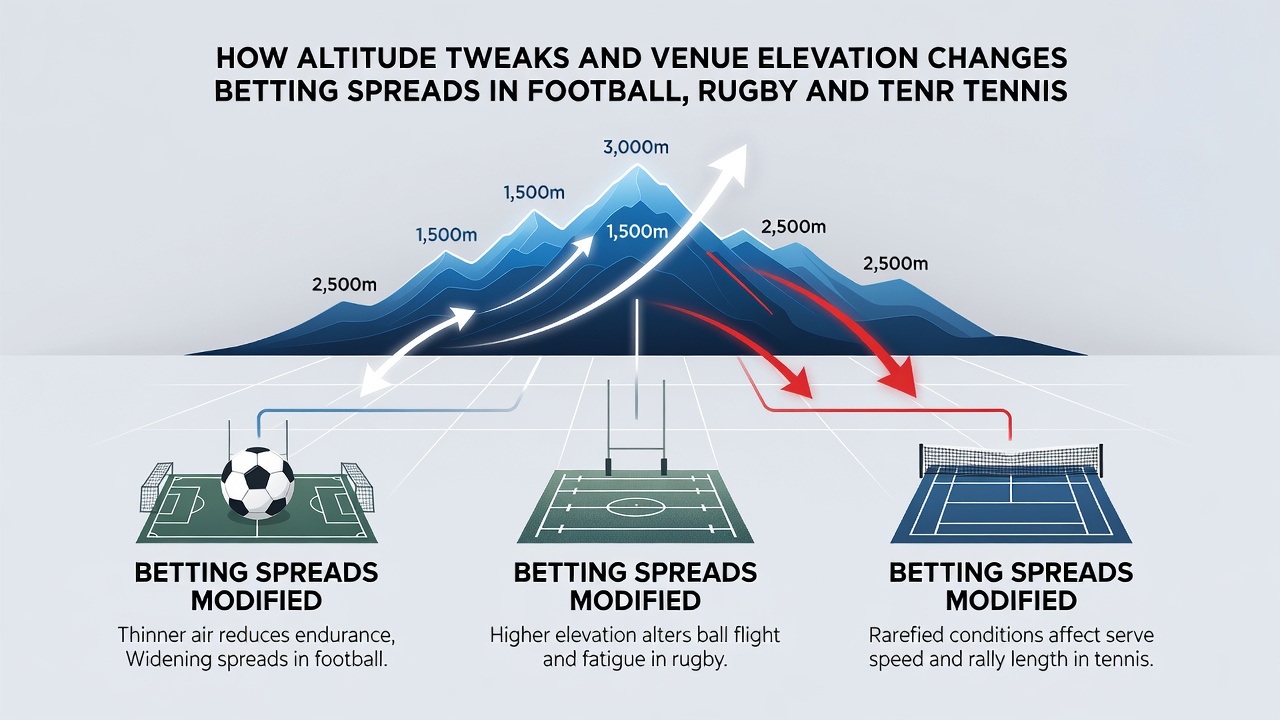
Elevation changes at competition venues create measurable shifts in player performance across football, rugby, and tennis, and those shifts feed directly into adjusted betting spreads. Data from multiple physiological studies show reduced oxygen availability at heights above 1,500 meters slows recovery between bursts of effort, alters ball flight characteristics, and changes overall match tempos. Bookmakers respond by widening or narrowing spreads on totals, handicaps, and player props to reflect the new conditions rather than relying solely on sea-level form guides.Football Matches at Elevated Stadiums
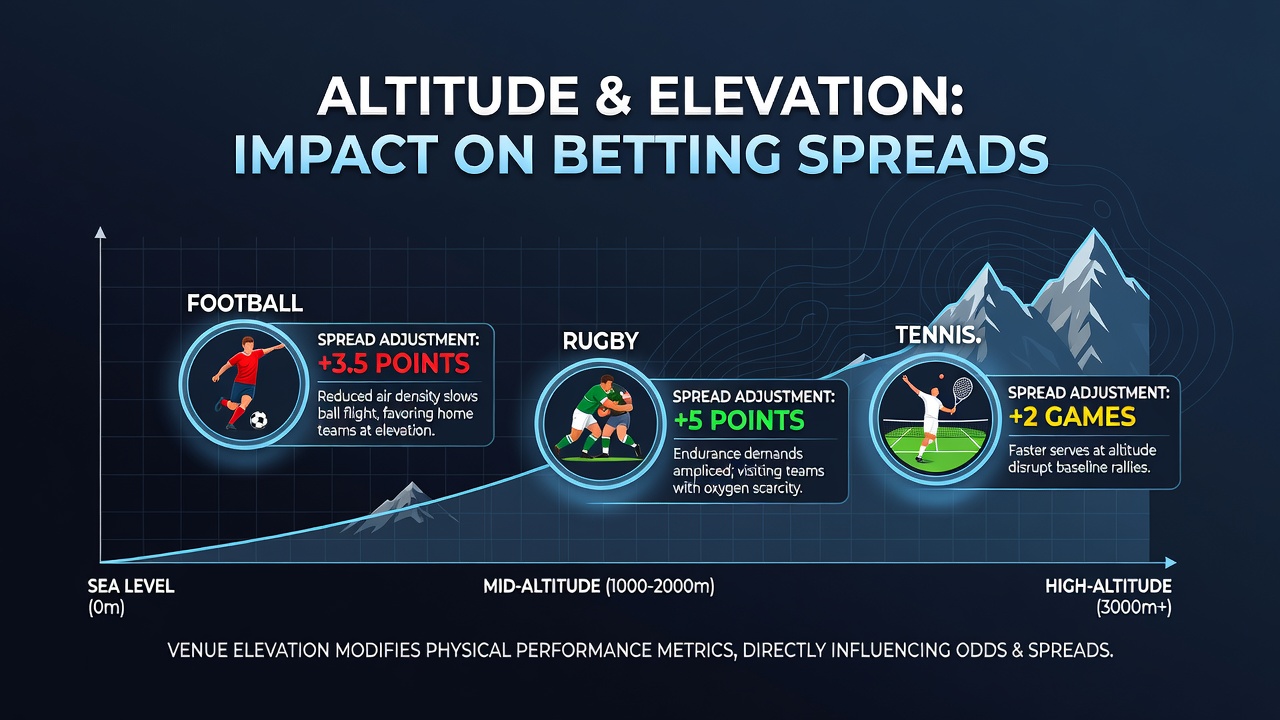
Football provides the clearest examples because many South American and North American venues sit well above 2,000 meters. Researchers tracking matches in Mexico City and La Paz have recorded average heart rates rising 10 to 15 beats per minute compared with lowland fixtures, while sprint distances drop by roughly 8 percent after the 60-minute mark. Those figures translate into fewer total goals in the second half and lower expected goal values for visiting sides. Betting operators therefore move the over/under line downward by 0.25 to 0.5 goals when a fixture moves from a coastal stadium to one of these highland grounds.
Preparation periods also matter. Teams that arrive several days early show smaller performance drops than those flying in the day before kickoff. Match data from CONMEBOL qualifiers between 2018 and 2024 indicate acclimatized squads concede 12 percent fewer shots after the 75th minute. Spread compilers incorporate travel schedules and training-camp locations when they publish opening lines for July 2026 World Cup qualifiers scheduled in Andean venues.
Rugby Union and League at Altitude
Rugby adds physical contact and repeated high-intensity phases that magnify altitude effects. Studies conducted by the Australian Institute of Sport found that scrum engagement times lengthen and tackle completion rates fall once matches exceed 1,800 meters. Because ruck speed directly influences possession turnover, markets on total match points tighten when fixtures shift to elevated stadiums in South Africa or the Andean region. Handicap spreads also move because visiting forward packs accumulate more fatigue-related penalties in the final quarter.
July 2026 tours involving southern hemisphere sides include several matches at altitude in the Americas. Operators have already published adjusted lines that reflect historical scoring drops of 6 to 9 points at those sites. Prop bets on carries and meters gained receive similar treatment, with visiting teams priced lower on individual player lines until acclimatization data becomes available mid-tour.
Tennis Tournaments on High Plateaus
Tennis presents a different set of variables because rallies last longer and recovery between points becomes critical. Ball speed increases at altitude due to lower air density, yet players experience faster onset of fatigue. Data collected at the Bogota Challenger events show average rally lengths shorten by one to two shots after the first set when courts sit above 2,500 meters. Consequently, spreads on total games played move lower, while first-set winner markets remain closer to sea-level benchmarks because the initial physiological impact is smaller.
ATP and WTA medical teams publish acclimatization guidelines that tournament organizers share with betting syndicates. Those guidelines note that players who compete at successive high-altitude events maintain higher service percentages than those arriving from lowland tournaments. Spread compilers therefore widen margins on underdog prices when a low-altitude seed faces a local player who has spent the preceding week training at the same elevation.
Combined Effects on Live and Pre-Match Markets
Live betting markets react even more quickly once matches begin. Real-time data feeds reveal heart-rate spikes and reduced acceleration metrics within the first 15 minutes at altitude, prompting immediate line adjustments. In football and rugby, totals markets shift toward the under within the opening quarter; in tennis, game spreads on longer matches tighten after the second set when both players show visible recovery delays. Observers note that syndicates monitoring wearable data often place the first corrective bets before the broader market catches up.
Regulatory bodies such as the European Gaming and Betting Association and research groups at the University of Calgary have examined these patterns across multiple seasons. Their reports confirm that elevation-driven adjustments appear consistently across the three sports and that operators who fail to account for travel schedules and acclimatization windows post wider margins of error on opening lines. As July 2026 approaches and more fixtures move between sea-level and highland venues, those same data sets continue to shape pre-match spreads and in-play volatility.