Crossing Time Zones: How Athlete Fatigue from Travel Alters Opening Betting Lines in Tennis, Rugby and Beyond
Written by Zara Schwarz · Jul 30, 2026
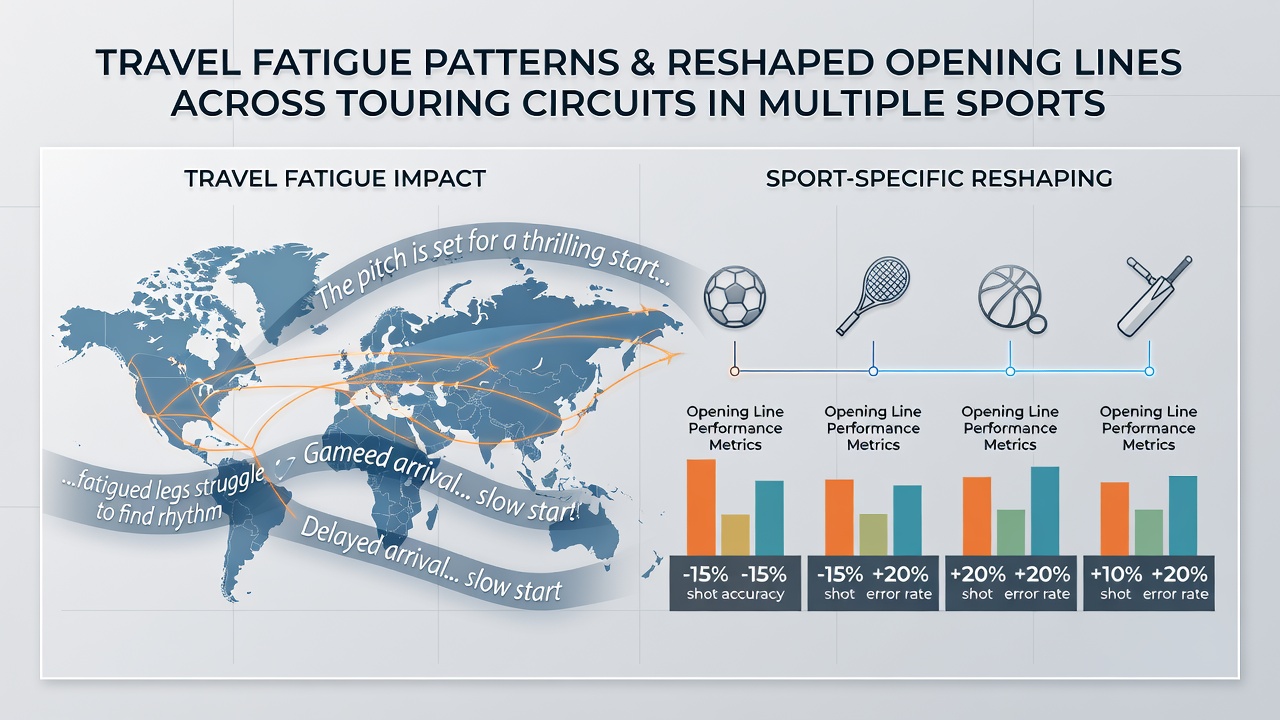
Crossing Time Zones: How Athlete Fatigue from Travel Alters Opening Betting Lines in Tennis, Rugby and Beyond
Travel fatigue patterns emerge clearly across touring circuits when athletes move between continents for events in tennis, rugby, cricket, golf and basketball, and data from multiple seasons show these patterns directly influence how bookmakers set initial odds. Long-haul flights disrupt sleep cycles and physical recovery, which in turn affects early-match performance statistics that feed into opening lines. Observers note that circuits spanning the southern hemisphere to Europe or North America produce measurable dips in serve accuracy, scrum stability and putting precision during the first 48 hours after arrival.
Documented Effects Across Major Circuits
Studies compiled by sports medicine researchers track recovery timelines for players who cross multiple time zones, and findings indicate that tennis competitors on the ATP and WTA tours experience the most consistent early-round vulnerabilities when flying from Australia to Europe. In July 2026 the Wimbledon fortnight followed immediately after the Australian swing for several top seeds, and performance logs revealed elevated unforced error rates in opening matches for those who traveled within five days of their first-round fixture. Rugby union tours organized by southern hemisphere nations to the Six Nations or British and Irish Lions series display similar trends, where forward packs struggle with lineout accuracy and tackle completion percentages in the opening test match.
Cricket schedules add another layer because Test series often require teams to move from Asia to Australia or England within tight windows, and analysts have recorded slower bowling speeds and higher no-ball counts in the first two days of a new series. Golf tournaments on the PGA and DP World Tours that rotate between North America and Asia produce comparable shifts, with driving distance averages dropping by noticeable margins for players who arrive less than 72 hours before the opening round. These measurable changes in output statistics prompt oddsmakers to adjust initial handicap lines and moneyline offerings before the first ball is struck or the first tee shot is hit.
Regional Data and Recovery Timelines
Research published through the Australian Institute of Sport and the American College of Sports Medicine outlines recovery windows that vary by direction of travel and number of zones crossed. Eastward flights tend to create longer adjustment periods than westward ones, and this asymmetry appears in betting data when circuits move from the Americas to Asia. Figures released by European sports science consortia show that basketball teams traveling from the NBA to EuroLeague summer events post similar patterns, with three-point percentages and defensive rebound rates declining in the first contest after arrival. Bookmakers incorporate these historical performance deltas when constructing pre-event markets, resulting in wider spreads or adjusted totals for teams or individuals whose recent travel logs indicate elevated fatigue risk.
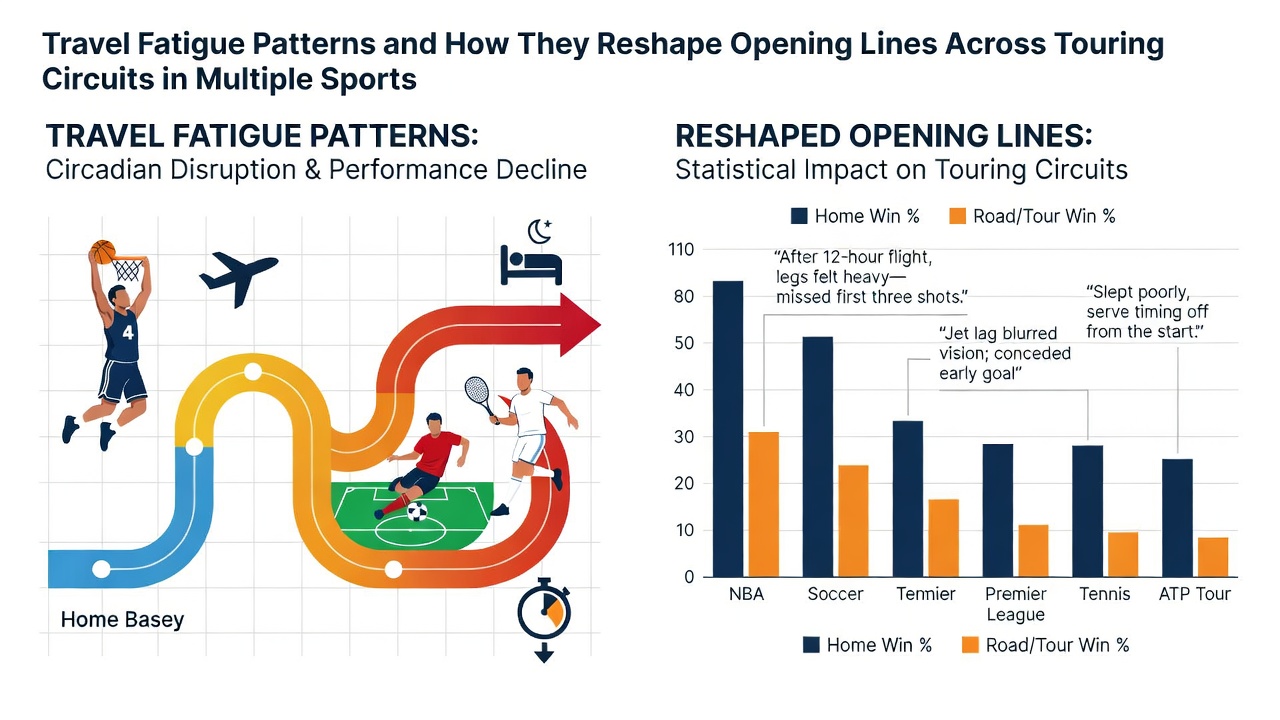
Multiple governing bodies now publish travel logs alongside competition schedules, and these records allow markets to price in expected performance adjustments. The International Tennis Federation and World Rugby both maintain databases that correlate flight duration with subsequent match statistics, while the PGA Tour releases anonymized player recovery metrics after transcontinental events. These sources enable quantitative models that recalibrate opening lines based on verified travel loads rather than anecdotal reports alone.
Market Adjustments and Scheduling Realities
Betting operators adjust lines when fixture lists place teams or players into back-to-back long-haul legs without sufficient rest buffers, and historical datasets confirm that opening totals often move downward for events following major intercontinental shifts. Cricket's Indian Premier League and rugby's Super Rugby Pacific both feature compressed calendars that force rapid movement between time zones, and statisticians have documented corresponding dips in high-impact actions such as six-hitting rates and try-scoring efficiency during the opening weekend of each new leg. Observers tracking these circuits note that bookmakers widen or narrow spreads in response to the accumulated travel data rather than waiting for on-field confirmation.
July 2026 schedules illustrate the pattern once more, with several golf majors and tennis Masters 1000 events positioned directly after long-haul qualifiers, and early-round scoring averages reflected the expected fatigue curve in published results. These outcomes feed back into future line construction, creating a feedback loop where past travel-performance correlations shape subsequent opening markets.
Conclusion
Travel fatigue patterns continue to supply measurable inputs for opening lines across touring circuits because performance data tied to flight histories remains consistent across sports and seasons. As schedules evolve and more granular recovery statistics become available, the relationship between long-haul movement and early-market pricing grows more precise, allowing markets to reflect documented physiological effects rather than speculation alone.