Elevation Effects: How Mountain Air and High-Altitude Venues Reshape Expectations in International Football, Endurance Horse Racing, and Mountain Golf Courses
Written by Tina Müller · Jun 30, 2026
Elevation Effects: How Mountain Air and High-Altitude Venues Reshape Expectations in International Football, Endurance Horse Racing, and Mountain Golf Courses
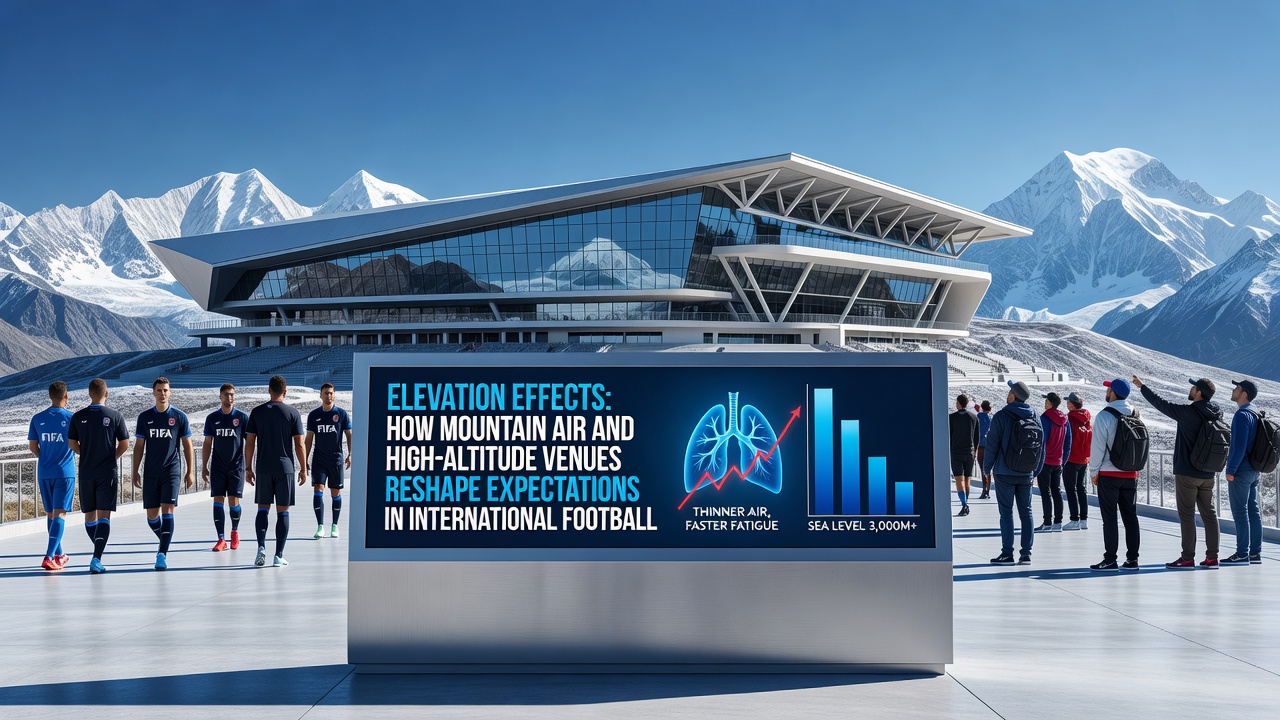
High-altitude environments alter oxygen availability, air density, and recovery patterns across multiple sports, and researchers continue to document these shifts in performance metrics for football, horse racing, and golf. Venues situated above 1,500 meters create measurable changes in cardiovascular demand and ball flight characteristics that teams and athletes must account for during preparation.
Physiological Pressures in International Football
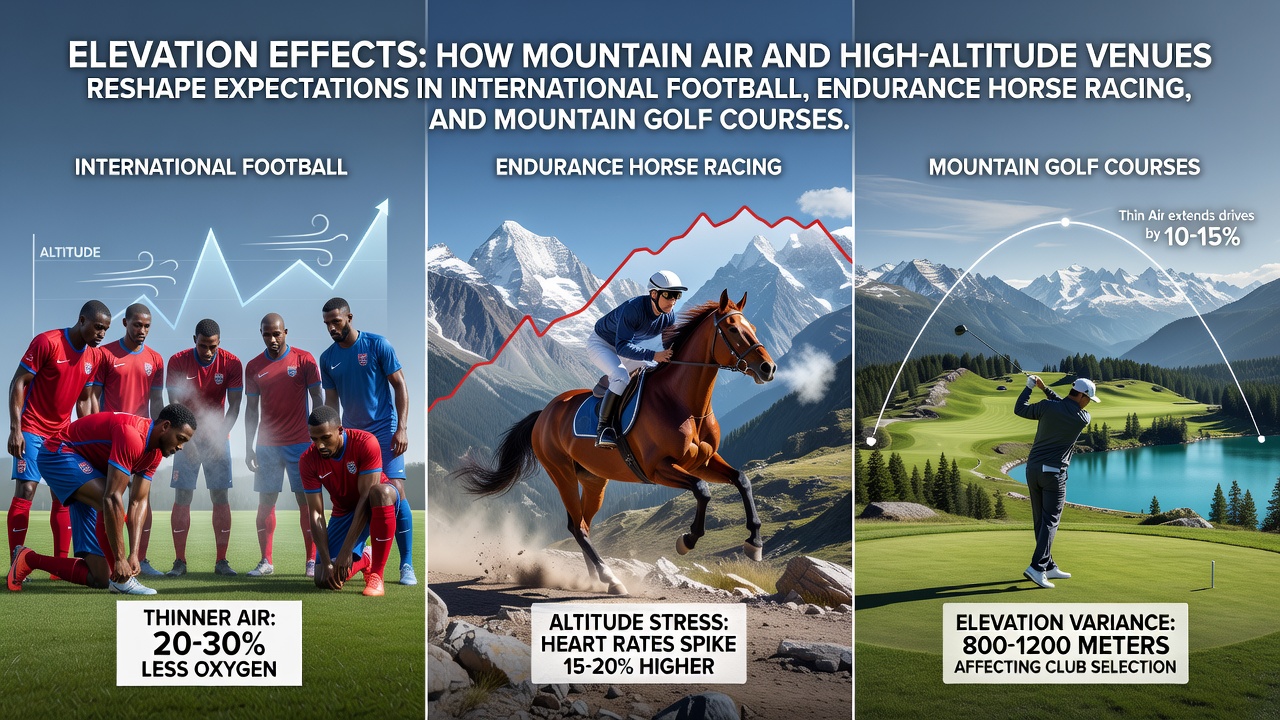
Matches played at elevations such as La Paz, Bolivia, at 3,650 meters reduce oxygen partial pressure, which forces players to adapt breathing rates and pacing within the first 15 minutes according to data collected during FIFA qualifiers. National teams from lower elevations record higher heart rates and quicker lactate accumulation, while squads based in the Andes show smaller decrements in sprint distance covered during the second half. Studies compiled by the Australian Institute of Sport track these differences across multiple tournaments and note that visiting sides often adjust substitution patterns earlier to maintain midfield coverage.
Ball trajectory also changes because thinner air produces less drag, allowing long passes and shots to travel farther than at sea level. Goalkeepers at venues like Estadio Hernando Siles report needing to adjust positioning by several meters on set pieces, and coaches have responded by emphasizing shorter build-up play to reduce turnovers in the defensive third. June 2026 preparations for upcoming confederation events already include altitude simulation camps in several European federations to mirror these conditions.
Endurance Demands in Mountain Horse Racing
Endurance events staged in regions such as the Swiss Alps or the Colorado Rockies place additional strain on equine respiratory systems, where reduced oxygen forces horses to modify stride frequency and heart-rate recovery between stages. Veterinary records from the Fédération Equestre Internationale show that horses competing above 2,000 meters exhibit elevated post-stage blood lactate levels compared with lowland races, prompting riders to monitor hydration and pacing more closely during multi-day competitions.
Trainers based in highland training centers report that acclimatization periods of 10 to 14 days improve oxygen-carrying capacity in red blood cells, yet visiting competitors often experience steeper performance drops after the halfway point of a 160-kilometer course. Course designers incorporate longer recovery loops at lower elevations within the route to mitigate cumulative fatigue, and timing data from recent alpine events indicate that split times widen by up to 8 percent on final ascents when oxygen saturation falls below 85 percent.
Shot Control and Course Management on Mountain Golf Courses
Golf courses carved into mountain terrain, including those in Banff, Canada, and the Austrian Alps, feature fairways that sit between 1,800 and 2,800 meters, where lower air density increases carry distance on tee shots by roughly 5 to 10 percent. Club selection therefore shifts one or two clubs lower on approach shots, and players adjust launch angles to account for reduced backspin. ShotLink data aggregated by the PGA Tour and European Tour confirm that average driving distance rises at these elevations while green-side control requires finer touch because the ball stops faster with less atmospheric resistance.
Putting surfaces at altitude can dry more rapidly because of increased UV exposure and wind patterns, altering green speeds during afternoon rounds. Course superintendents in these regions apply additional moisture management protocols, and players who compete regularly at such venues develop routines for reading subtle breaks caused by mountain contours rather than relying solely on distance markers calibrated at sea level.
Strategic Adjustments Across Disciplines
Coaches, riders, and players integrate altitude-specific planning into pre-event schedules, from oxygen tents during training blocks to revised nutrition timelines that support red-blood-cell production. Data from the Canadian Sport Institute indicates that consistent exposure protocols reduce performance variance by measurable margins in repeat high-altitude fixtures. Event organizers meanwhile publish venue-specific guidelines that cover hydration stations, medical monitoring, and equipment calibration to standardize conditions for all participants.
Conclusion
Elevation continues to influence outcomes in football internationals, endurance horse races, and mountain golf through predictable physiological and aerodynamic mechanisms. Teams and athletes who incorporate verified acclimatization and tactical modifications maintain competitive margins when competing at these venues, while governing bodies supply the supporting research that informs preparation standards.