Mental Fortitude Factors: How Psychological Elements Affect Handicap Calculations in Boxing, Darts, and Tennis Matches
Written by Zoe Hansen · Jun 28, 2026
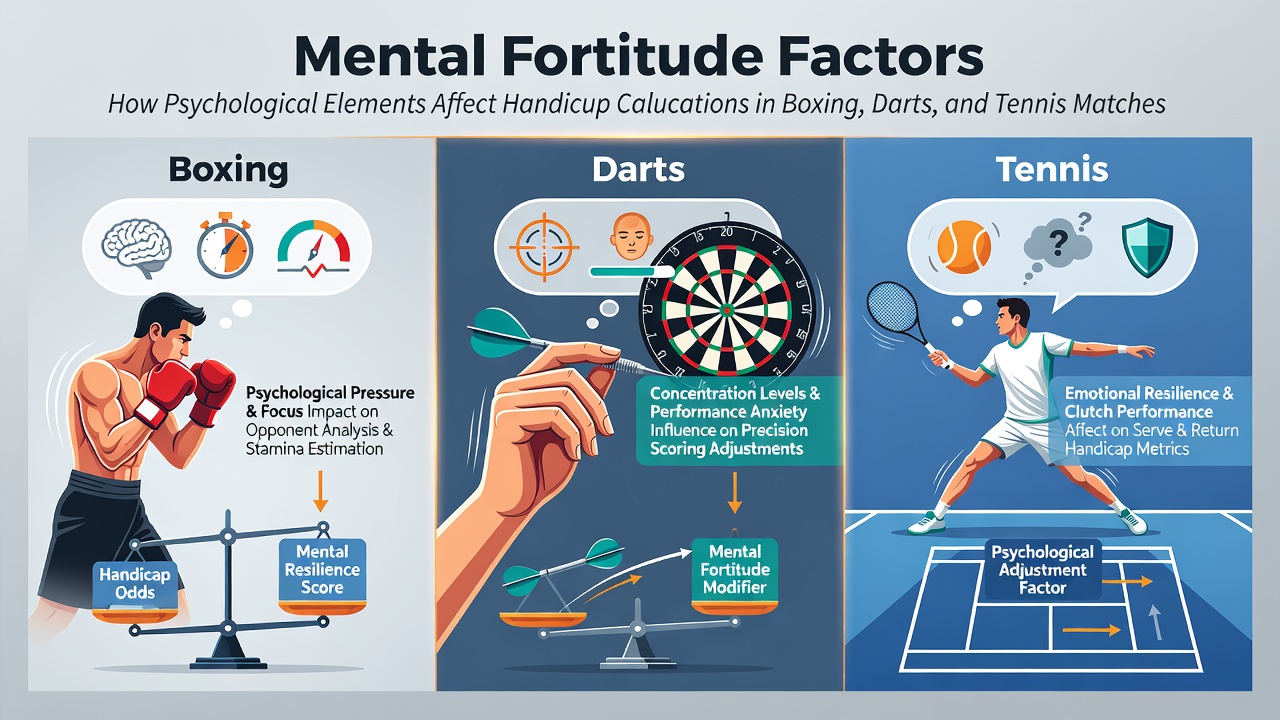
Mental Fortitude Factors: How Psychological Elements Affect Handicap Calculations in Boxing, Darts, and Tennis Matches
Psychological resilience shapes performance outcomes across combat, precision, and racket sports, and betting markets incorporate these variables when setting handicap lines. Observers note that mental factors such as focus under pressure, recovery from setbacks, and emotional regulation influence win probabilities, leading analysts to adjust spreads in boxing, darts, and tennis contests. Data compiled through 2025 and into June 2026 shows measurable correlations between psychological profiles and point differentials that directly feed into handicap models.
Core Psychological Variables in Performance Data
Studies track variables including pre-match anxiety levels, in-game decision latency, and post-error recovery times. Researchers at institutions like the German Sport University Cologne have documented how elevated cortisol responses correlate with reduced accuracy in precision tasks, while lower stress markers align with sustained output over extended rallies or rounds. These metrics enter handicap calculations when operators compile player histories that separate physical skill from mental consistency across multiple events.
Handicap setters examine patterns where athletes maintain execution despite crowd noise or opponent momentum shifts. In datasets covering professional circuits, players who demonstrate faster return-to-baseline heart rates after critical errors post smaller variance in scoring margins, prompting tighter spreads in subsequent matches. Conversely, documented cases of prolonged recovery periods widen those same lines because historical results indicate higher likelihood of larger point or round deficits.
Application in Boxing Matchups
Boxing handicaps account for rounds expected between fighters, yet psychological endurance modifies those projections when one competitor has a record of maintaining output through late-round fatigue. Fight data from major promotions reveals that boxers who exhibit stable punch accuracy after absorbing early combinations tend to exceed projected round totals less frequently than peers with higher emotional reactivity. Analysts therefore narrow round handicaps for fighters whose fight-film reviews show consistent breathing control and tactical adherence under duress.
June 2026 title eliminators provide fresh examples where mental preparation logs from training camps influenced opening lines. Fighters entering with verified visualization routines and sleep-quality monitoring produced tighter spreads than counterparts without such documented protocols, because past performances under similar conditions produced narrower score margins. Those adjustments reflect aggregated bout statistics rather than speculation.
Precision Demands in Darts Events
Darts tournaments feature checkout percentages and leg differentials that shift when mental steadiness varies during sudden-death legs. Performance logs from PDC events indicate that players who sustain throw tempo after missed doubles record higher conversion rates in best-of sets, leading to adjusted handicap thresholds on leg spreads. Operators integrate these figures because repeated observations show that tempo disruption correlates with wider scoring gaps in later stages of matches.
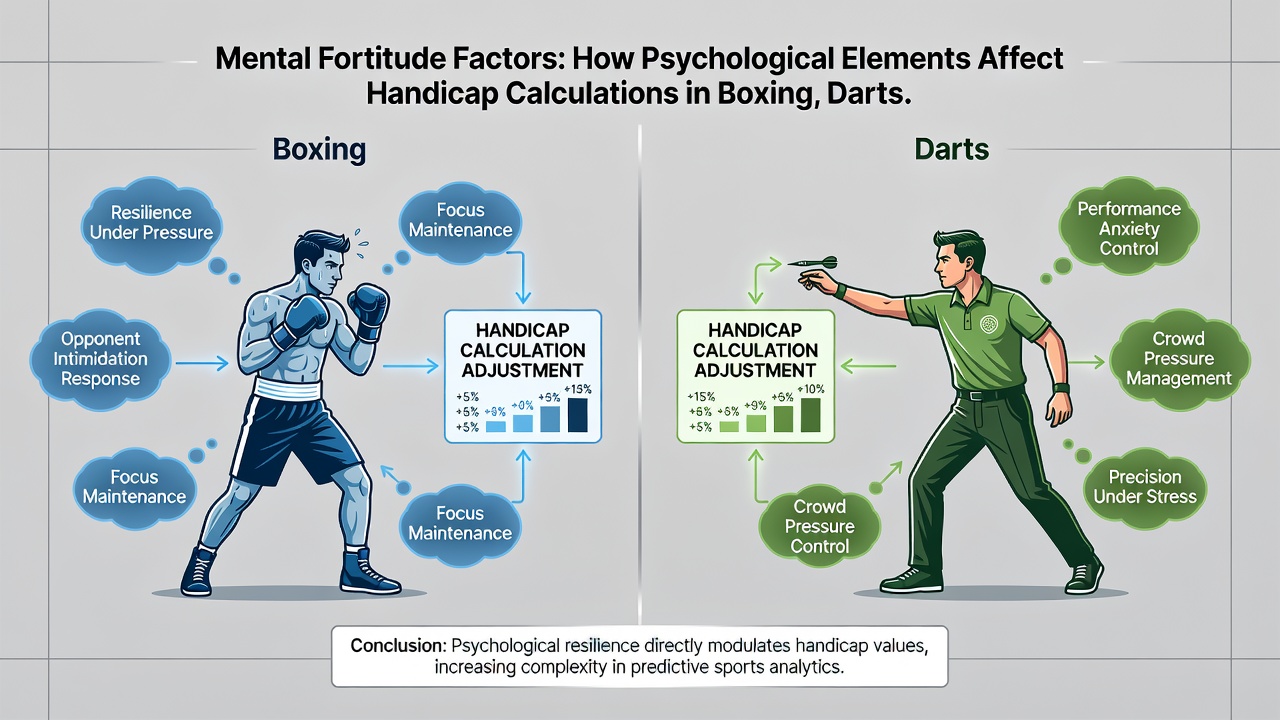
Research published through the Australian Institute of Sport links pre-throw routine consistency with reduced variance in three-dart averages across pressure situations. Handicappers apply these findings when constructing player versus field spreads, shortening lines for competitors whose tournament data demonstrates stable routines even after consecutive missed finishes. The result appears in markets where leg handicaps compress for athletes with proven mental reset patterns.
Tennis Match Dynamics and Mental Metrics
Tennis handicap calculations incorporate break-point conversion rates and tie-break outcomes, both of which display sensitivity to psychological load. Match analytics from ATP and WTA circuits demonstrate that players who limit unforced errors following lost service games maintain higher set-win percentages, prompting operators to adjust game spreads accordingly. Data aggregated through 2026 indicates narrower spreads for competitors whose point-by-point records reflect rapid emotional recovery measured via rally length stability.
Surfaces and match lengths further interact with these factors. Extended fifth sets on grass or clay surfaces amplify the weight given to mental endurance statistics, since historical score distributions show greater divergence between players with differing resilience profiles. Handicappers therefore reference longitudinal datasets that separate physical endurance from psychological consistency when finalizing game or set lines.
Integration of Data Sources in Market Adjustments
Operators combine biometric feedback, post-match interviews, and video-coded behavioral indicators to refine models. Figures from the National Collegiate Athletic Association sports science reports, alongside European tennis federation studies, supply cross-sport benchmarks that allow calibration of handicap sensitivity to mental variables. These inputs produce dynamic line movements when new performance data arrives after major tournaments or title fights.
Patterns emerge most clearly in head-to-head histories where one participant repeatedly outperforms projected margins under identical physical conditions but differing psychological contexts. Markets respond by tightening or widening spreads to reflect those observed deviations rather than raw physical metrics alone.
Conclusion
Psychological elements enter handicap calculations through performance datasets that quantify consistency under pressure in boxing, darts, and tennis. Operators apply these measurements because repeated observations across thousands of matches demonstrate their influence on scoring margins and round totals. Continued collection of biometric and behavioral data through mid-2026 supports ongoing refinement of spreads that distinguish mental fortitude from technical skill.