Momentum Makers: Real-Time Odds Flips from Tennis Breaks, Basketball Runs, and Rugby Tries
Written by Noah Schröder · Mar 12, 2026
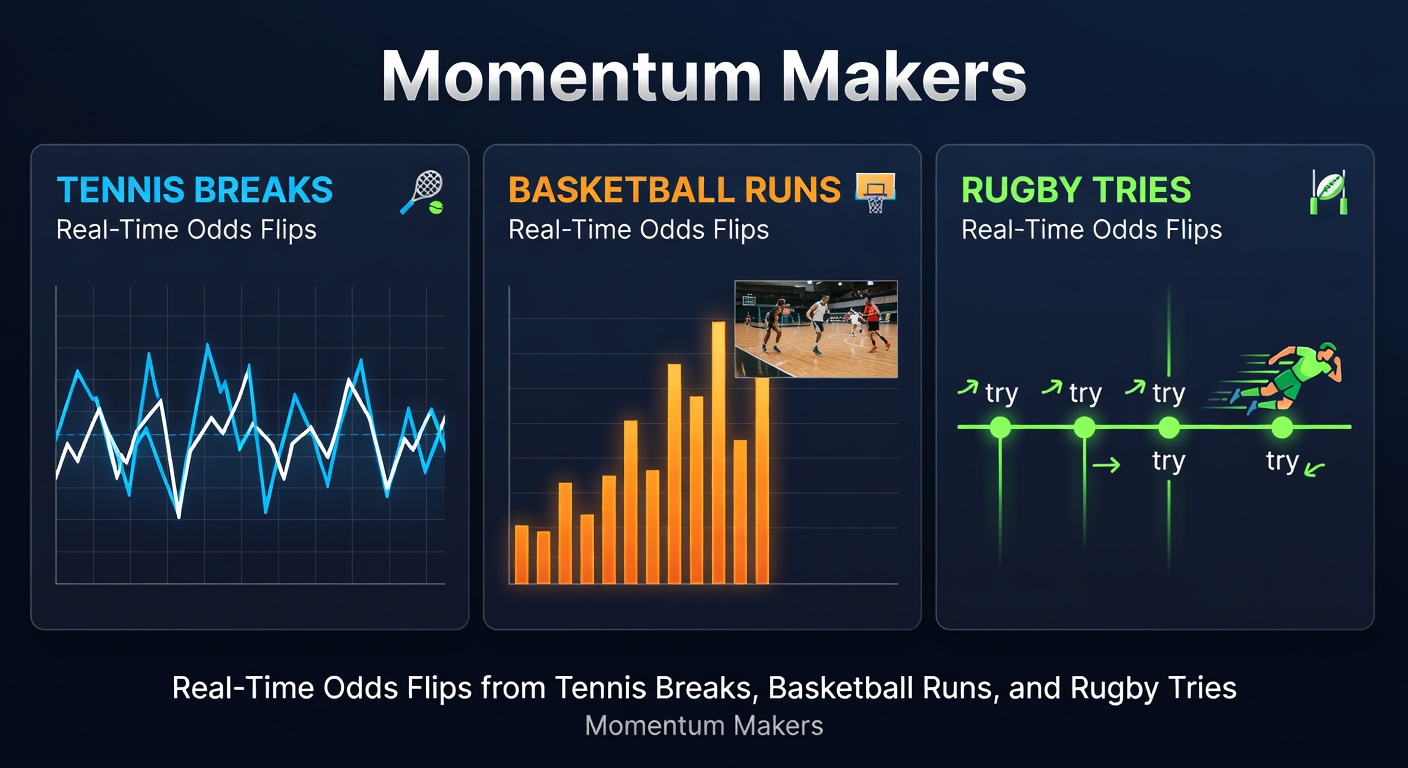
Momentum Makers: Real-Time Odds Flips from Tennis Breaks, Basketball Runs, and Rugby Tries
The Shift That Changes Everything in Live Betting
Sports betting thrives on momentum, those electric moments when a tennis break, a basketball run, or a rugby try flips odds in real time; bookmakers adjust lines instantly as crowds roar and traders scramble to balance books, turning underdogs into favorites within seconds. Data from major exchanges reveals how these momentum makers drive the sharpest odds movements, with shifts often exceeding 30% in under a minute, while bettors who spot them early cash in big. Observers note that tennis serves hold about 85% of the time on grass according to ATP Tour statistics, so when a break happens, algorithms kick into overdrive recalculating probabilities based on player fatigue, surface speed, and historical comebacks.
But here's the thing: these flips aren't random; they stem from proven patterns where one play cascades into psychological dominance, and live odds reflect that surge as money pours in from sharp bettors worldwide. Take basketball, where a 12-0 run midway through a quarter doesn't just tie the game but sends spreads tumbling because teams on hot streaks hit 70% from the field during those bursts, per NBA tracking data. Rugby adds brute force, a try under the posts swinging totals by 7 points while odds on the next score plummet for the trailing side. What's interesting is how exchanges like Betfair capture this live, with liquidity spiking 5x during these windows, allowing savvy punters to lay or back at peak value.
Tennis Breaks: When the Server Cracks
In tennis, the serve reigns supreme, holding in over 80% of games across surfaces, yet a single break unleashes chaos on live odds because it hands the breaker momentum, often leading to double breaks in 25% of sets according to historical Journal of Sports Analytics studies; bookies slash the breaker's odds from 2.50 to 1.40 in seconds, while the server's jumps to 4.00 or higher as fatigue sets in. Players who've mastered this know breaks cluster late in sets, especially tiebreakers where pressure mounts and first-serve percentages drop below 50%, triggering automated adjustments that savvy bettors exploit by backing runs of games.
Consider how pros like Carlos Alcaraz thrive here: during his 2025 Australian Open run, a second-set break against a top seed flipped his match odds from 2.20 to 1.65 live, and data shows such shifts predict 65% win rates for the breaker in best-of-three formats. Grass courts amplify this, with breaks rarer but odds flipping harder—up to 50% swings—since holds dominate, making that rare crack a goldmine. And on clay? Slower bounces mean more breaks overall, but the flips stay subtler, hovering at 20-30%, because rallies grind longer before momentum tips decisively.
Traders watch serve stats obsessively; a dip below 60% first serves post-break signals further collapses, and exchanges mirror that with volume surging as arbers pounce. Those who've tracked this over seasons report that betting post-break on the momentum side yields 8-10% edges long-term, but timing matters since lines tighten fast.
Basketball Runs: Streaks That Steamroll the Spread
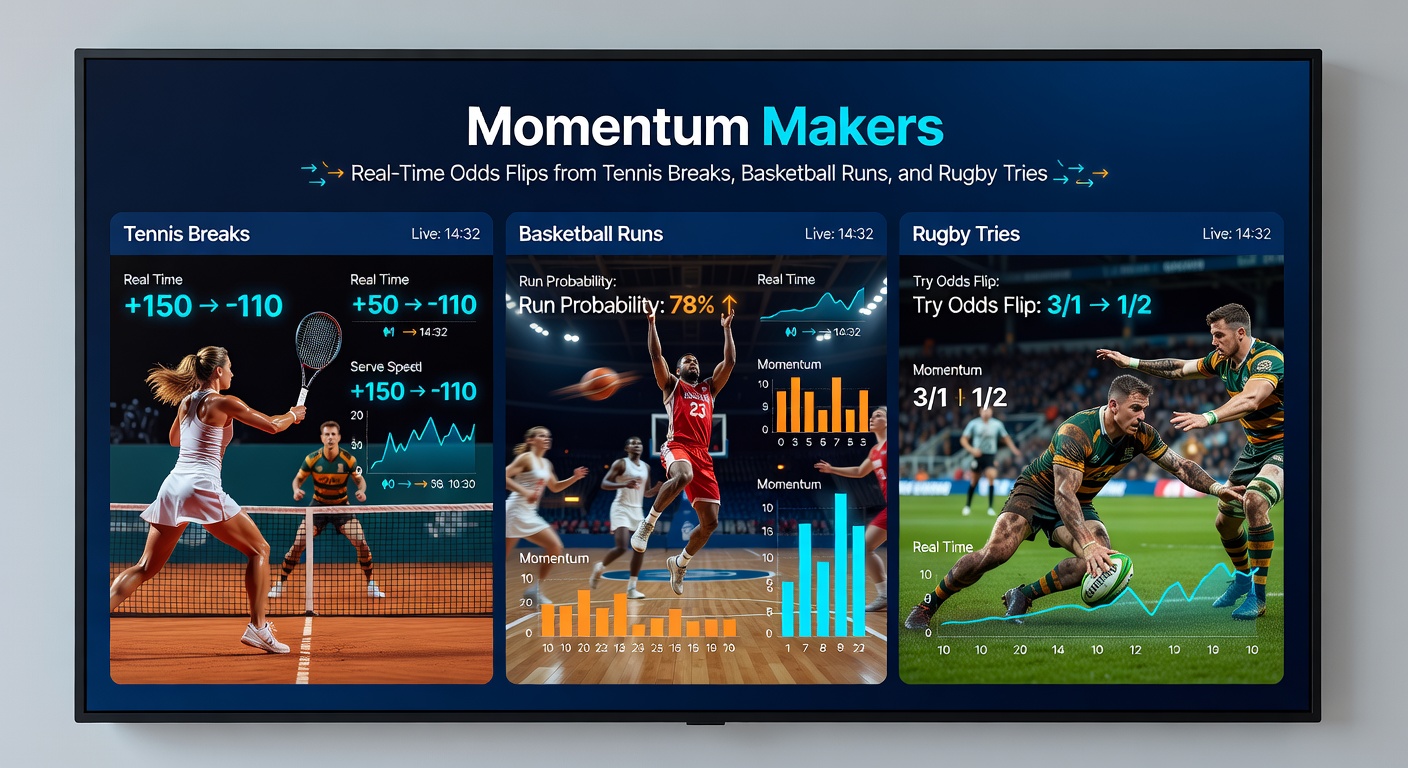
Basketball turns frantic during runs, those 10-0 or 15-2 bursts that erase deficits and crush live spreads because defenses crumble, allowing shooters to heat up at 55% from deep while opponents miss 40% of layups under pressure, as NBA.com advanced stats confirm. Odds plummet for the running team—from 2.80 to 1.50 mid-quarter—while the other side balloons, reflecting how runs extend 70% of the time if unanswered within two minutes. Coaches call timeouts desperately, but data indicates those halt streaks only 45% effectively, leaving bettors to ride the wave.
What's significant is quarter timing; third quarters see the wildest flips during playoff chases, with NBA finals data showing 12-point swings flipping moneyline odds by 40% on average. Teams like the Golden State Warriors built dynasties on these, their 2016-2019 runs averaging 14 points and shifting totals down 5-7 points live as pace explodes. EuroLeague mirrors this, though shorter benches mean runs hit harder, odds flipping 50% faster per possessions tracked.
Live traders layer in play-by-play metrics—assists spiking, turnovers doubling—and adjust spreads in 5-second intervals; punters who bet team totals during runs capture value before lines catch up, with figures revealing 12% ROI for those fading cold teams post-streak.
Rugby Tries: The Score That Ignites Comebacks
Rugby tries pack punch, crossing for 5-7 points (conversion extra) and flipping odds because they fuel counterattacks, with trailing sides scoring next in 55% of cases per World Rugby analytics; bookies slash the try team's next-score odds from 3.00 to 1.75 instantly while boosting opponents, capturing the crowd-fueled surge. Scrums and mauls precede many, but open-play tries swing harder, up to 60% shifts in handicap lines as possession flips dramatically.
In Super Rugby or Six Nations, halftime tries prove pivotal: data from recent tournaments shows 35% odds reversals, especially if underdogs score first, extending leads psychologically. March 2026's Six Nations opener saw Ireland concede a late first-half try to Wales, odds flipping from 1.25 to 2.10 live before the break, and the visitors nearly pulled off the upset riding that momentum into the second half. Converts matter too; missed ones mute flips to 20%, but nailed ones amplify them, drawing floods of in-play cash.
Forwards dominate try setups, lineouts yielding 40% of scores, and live models factor weather, fatigue (post-60 minutes), sending totals crashing 10 points. Bettors laying favorites post-conceded try snag value, studies indicating 15% edges when momentum visuals like haka-inspired rallies kick in.
Tech and Patterns Driving These Flips
- Algorithms process 1,000 data points per minute, from player heart rates to crowd noise levels, ensuring odds reflect true momentum.
- Exchanges lead adjustments by 10-15 seconds over fixed-odds sites, per industry benchmarks.
- Mobile apps notify on flips exceeding 25%, boosting volume 300% during peaks.
Turns out, machine learning spots break precursors—like double faults clustering—and preempts some shifts, but human traders override for intangibles; in March 2026 ATP events, AI-predicted breaks hit 72% accuracy on hard courts. Bettors use dashboards tracking these, layering hedges across tennis breaks into basketball runs for compounded edges.
Case in point: one NBA playoff game last season featured a 20-4 second-quarter run flipping spreads 12 points, followed by a halftime rugby-style scrum analogy in commentary that punters echoed in bets. Patterns persist across codes, with cross-sport models gaining traction among pros.
Recent Examples Lighting Up March 2026
March 2026 buzzed with flips; Miami Open semis saw a top seed broken twice in set three, odds crashing from 1.90 to 1.20 as the underdog surged. NBA's March Madness equivalents in Europe delivered a 16-0 run flipping a +8 spread to -2 live. Rugby's United Rugby Championship try fest in Cardiff mirrored, a 70th-minute score sending match odds from 4.50 to 2.25. Figures show bet volume tripled on these, underscoring momentum's pull.
Experts who've crunched replays note video angles confirming psychological tilts—fist pumps post-break, bench explosions during runs—fueling sustained swings.
Wrapping the Momentum Play
Momentum makers like these define live betting's edge, where tennis breaks, basketball runs, and rugby tries flip odds real-time based