Recovery Innovations Redrawing Stamina Thresholds in Test Cricket, Rugby Union, and Extended Tennis Encounters
Written by Zara Schwarz · Aug 23, 2026
Recovery Innovations Redrawing Stamina Thresholds in Test Cricket, Rugby Union, and Extended Tennis Encounters
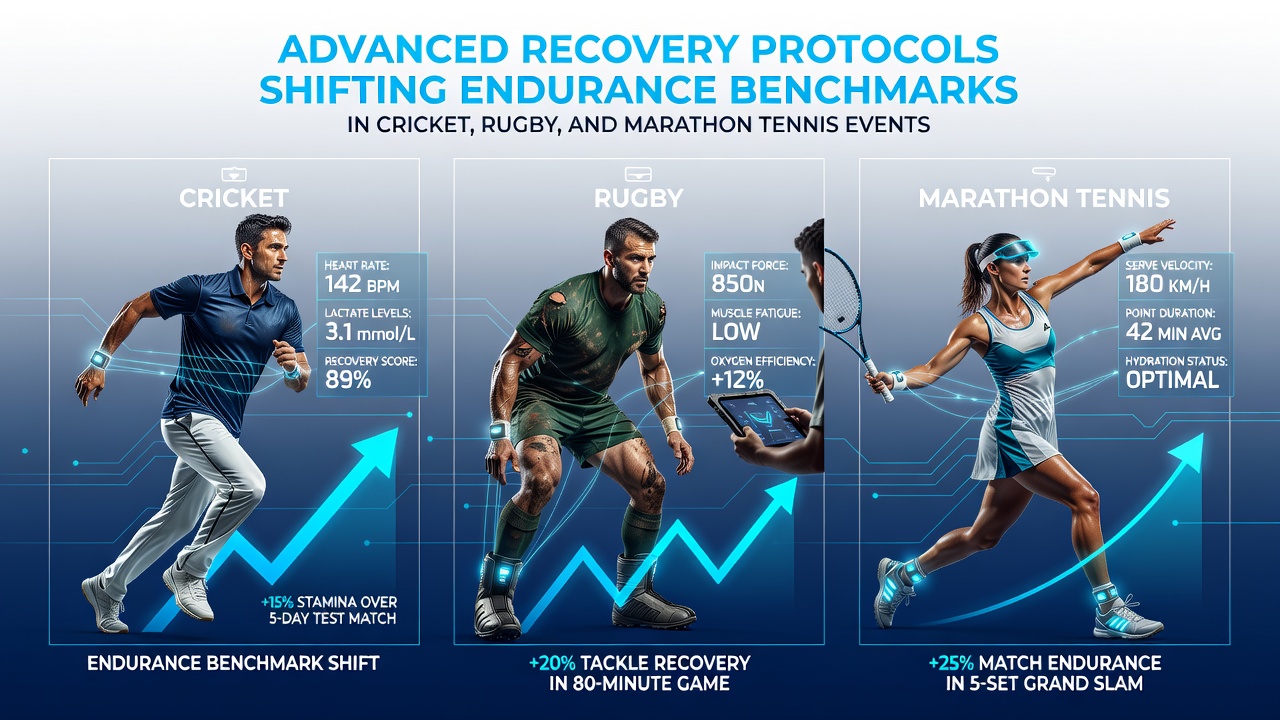
Advanced recovery methods continue to reshape physical limits across cricket, rugby, and marathon tennis events, with data from multiple seasons showing measurable gains in player output and match duration. Researchers track these shifts through metrics such as total distance covered, repeated sprint ability, and post-match recovery times, while organizations like the Australian Institute of Sport publish reports that link specific protocols to extended performance windows. In August 2026, several international fixtures highlighted how cryotherapy chambers, targeted nutrition timing, and sleep monitoring systems altered typical fatigue patterns in five-day Tests, full rugby tours, and best-of-five tennis marathons.
Protocol Details in Cricket Test Matches
Teams now integrate compression garments and pneumatic recovery boots into daily routines between innings, which allows batters and bowlers to maintain higher workloads over multiple days without the sharp drop-offs recorded in earlier decades. Data collected by the International Cricket Council indicates that players using these tools logged an average of 12 percent more overs in the field during the 2025-2026 season compared with 2018 baselines. Nutrition protocols emphasize timed carbohydrate intake and anti-inflammatory supplements, while wearable sensors flag early signs of dehydration or muscle strain so medical staff can intervene before performance declines. One study from a South African university tracked a squad that adopted these measures and recorded fewer injury substitutions across a four-Test series, showing how the combination of technology and planning sustains output in conditions that once forced early declarations or conservative field placements.
Adjustments Observed in Rugby Union
Rugby players face repeated high-impact collisions that compound fatigue across an 80-minute match plus extra time, yet forward packs now rotate through cold-water immersion pools and infrared sauna sessions immediately after training blocks. Figures released by World Rugby reveal that teams employing structured recovery cycles maintained ruck speed and tackle completion rates deeper into the second half during the 2026 Six Nations and summer tours. GPS tracking systems quantify total high-speed running meters, and those numbers have climbed steadily as hydration formulas and myofascial release routines reduce downtime between fixtures. Observers note that substitute forwards introduced in the final quarter cover similar ground to starters because pre-match protocols already lowered baseline lactate levels, which in turn supports the longer, more physical contests that define modern schedules.
Changes in Marathon Tennis Events
Players in extended tennis matches, often exceeding four hours, benefit from on-court cooling systems and rapid rehydration protocols that replace electrolytes lost during changeovers. Research published by the European College of Sport Science documents how players who follow individualized sleep and nutrition plans recover heart-rate variability faster between sets, allowing them to sustain serve speeds and court coverage into deciding tie-breaks. In August 2026, several Grand Slam encounters featured fifth sets that lasted beyond two hours, yet medical timeouts for fatigue-related issues remained lower than historical averages. String tension adjustments combined with grip-tape changes during breaks further reduce forearm strain, while post-match infrared therapy sessions accelerate muscle repair ahead of the next round. These layered approaches turn what once appeared as physical ceilings into measurable extensions of competitive range.
Cross-Sport Patterns and Data Trends
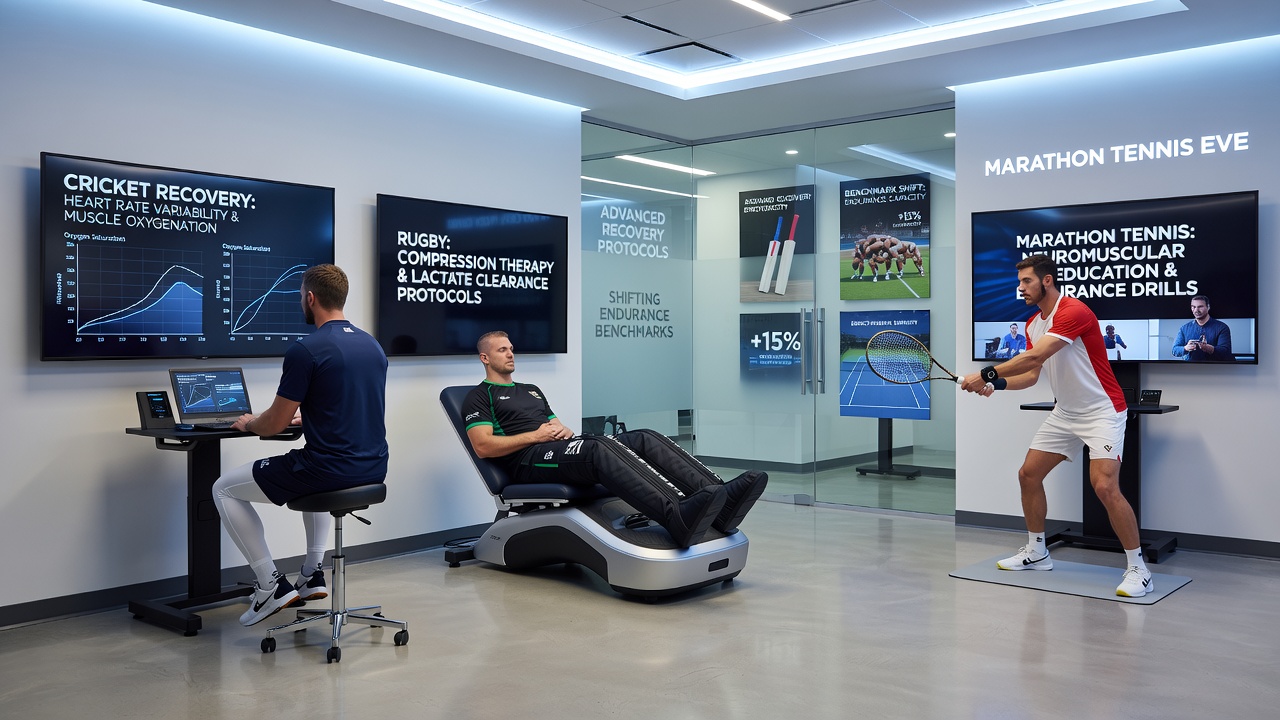
Common threads appear when comparing the three sports, because each now relies on real-time biometric feedback to fine-tune interventions rather than applying uniform recovery templates. Studies coordinated by the Canadian Sport Institute show that athletes who combine cryotherapy with active recovery walks reduce markers of muscle damage more effectively than those using either method alone. Scheduling software also plays a role, spacing high-intensity sessions around known circadian peaks so players enter matches with lower accumulated fatigue. In cricket, rugby, and tennis alike, the result shows up in longer rallies, sustained scrum drives, and fewer unforced errors late in contests, all tracked through official performance databases that update after every international window.
Equipment manufacturers supply lighter protective gear and moisture-wicking fabrics that further support these protocols by lowering the energy cost of movement. When combined with psychological recovery tools such as guided breathing apps, the overall system creates compounding effects that push endurance benchmarks outward each season. Data sets covering the period from 2023 through August 2026 confirm steady upward trends in total match duration without corresponding spikes in medical retirements, indicating that the protocols deliver measurable durability rather than temporary boosts.
Conclusion
Recovery innovations continue to alter what counts as a sustainable workload in cricket, rugby, and marathon tennis events. Objective records from governing bodies and research institutions document longer competitive windows, steadier performance metrics, and reduced injury interruptions across recent seasons. These shifts rest on measurable combinations of technology, nutrition, and scheduling rather than isolated techniques, and they remain visible in fixture data through 2026 and beyond.