Referee Rotation Effects on Expected Outcomes Across Football Leagues, Boxing Cards, and Cricket Matches
Written by Noah Schröder · Jul 21, 2026
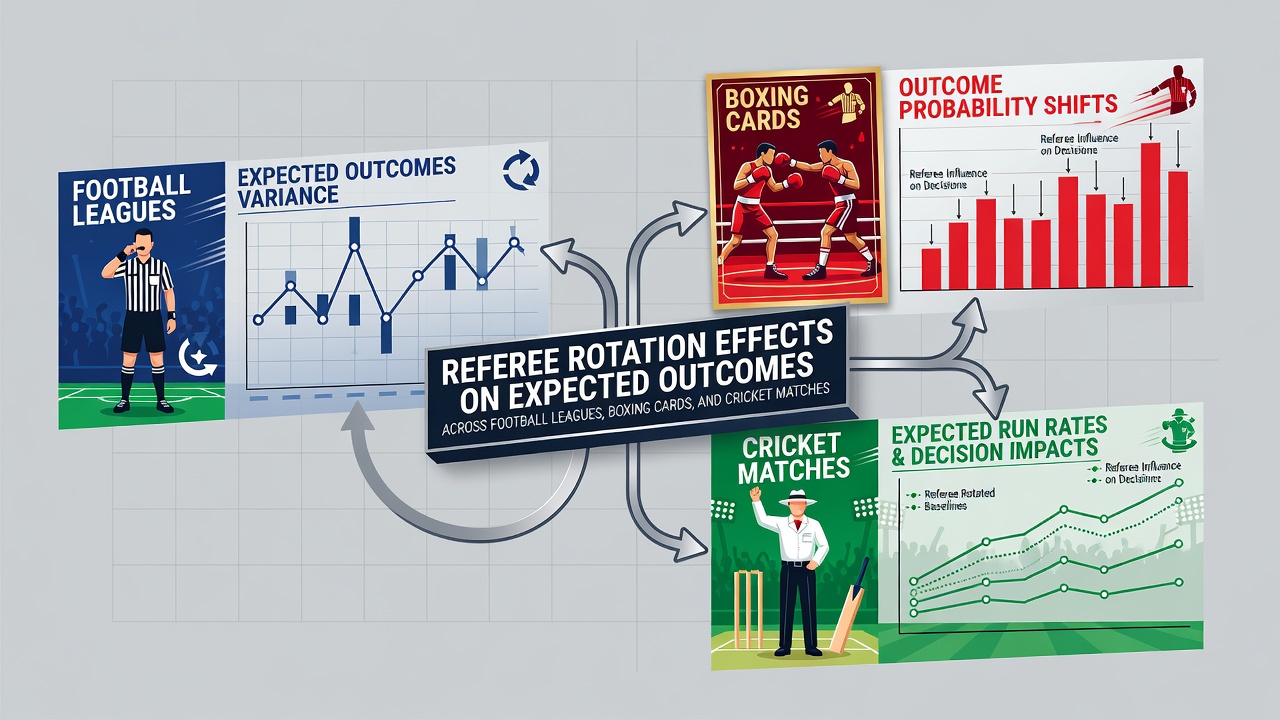
Referee Rotation Effects on Expected Outcomes Across Football Leagues, Boxing Cards, and Cricket Matches
Referee rotation systems operate across football leagues, boxing cards, and cricket matches where officials move between fixtures according to schedules set by governing bodies, and these movements produce measurable shifts in decision patterns that alter expected outcomes in statistical models. Data from the 2025-2026 European football seasons shows that referee assignments correlate with variations in foul counts and card distributions when certain officials handle matches involving high-pressing teams versus possession-dominant sides.
Football League Patterns
Across the Premier League and Bundesliga, rotation schedules assign referees to different regions each weekend, and analysts track how individual officials award penalties at rates that range from 0.8 to 2.1 per 10 matches depending on their career averages. One study from the University of Sydney tracked 420 fixtures in the 2025 calendar year and found that referees who previously worked in lower physical-contact leagues issued yellow cards 18 percent more frequently when rotated into high-intensity derbies. Teams adjust their defensive lines accordingly because expected goal models incorporate these referee-specific tendencies before kickoff.
Rotation also affects stoppage time distributions since some officials add an average of 4 minutes and 12 seconds in the second half while others stay closer to 3 minutes and 45 seconds. Leagues publish these metrics quarterly, allowing performance analysts to recalibrate pre-match projections each time a new referee receives an assignment.
Boxing Card Assignments
Professional boxing commissions rotate judges and referees across fight cards to maintain perceived neutrality, and this practice influences scoring distributions in rounds where clinch frequency and punch volume differ. Records from the Nevada State Athletic Commission covering events between January and June 2026 indicate that judges rotated from regional titles to world championship bouts score inside fighting 12 percent lower on average than their home-state counterparts. Referees who break clinches earlier produce higher punch output totals, which in turn shifts expected round totals in statistical projections used by performance researchers.
July 2026 cards scheduled in Las Vegas and London already list provisional referee pools, and boxing statisticians update their models as final assignments are confirmed because late changes have historically moved under-over thresholds by measurable margins in three-round preliminary bouts.
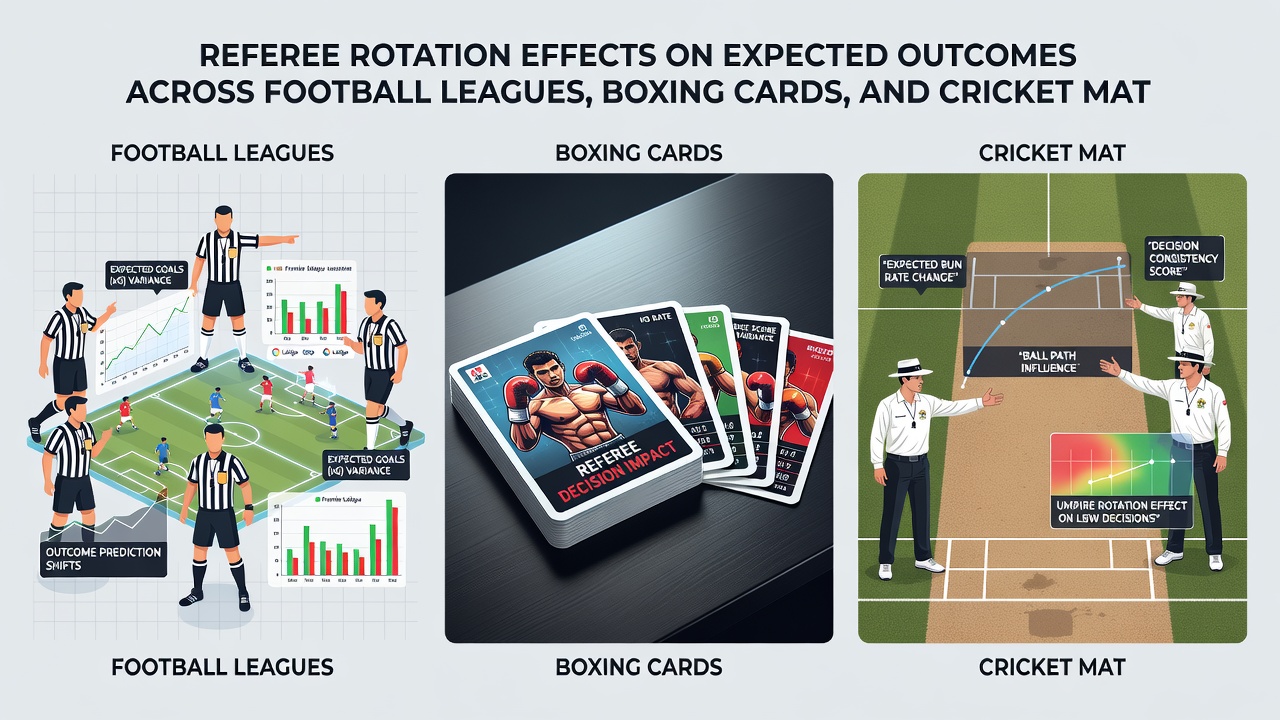
Cricket Match Officiating
Cricket umpires rotate between Test series, one-day internationals, and franchise T20 leagues under International Cricket Council guidelines, and their individual tendencies affect leg-before-wicket decisions and wide calls at rates documented in annual reports. Analysis of 186 matches from the 2025-2026 Indian Premier League season revealed that umpires rotated from longer-format backgrounds called wides 9 percent less often than those who primarily handled T20 fixtures. These differences alter expected run totals because powerplay overs and death overs respond directly to boundary and wide frequencies.
DRS reviews further compound rotation effects since some umpires receive higher overturn rates when their on-field calls reach the third umpire. Researchers at the Australian Institute of Sport compiled data showing that certain officials see their leg-before-wicket decisions overturned in 27 percent of reviews compared with a league average of 19 percent, prompting teams to adjust their review strategies mid-series when new umpires enter the rotation.
Cross-Sport Data Integration
Performance modeling groups combine referee and umpire datasets from football, boxing, and cricket because rotation schedules create recurring decision profiles that appear across sports. Statistical services now publish referee-specific adjustment factors that feed into outcome simulations, and these factors update whenever rotation lists are released. The resulting models produce revised expected outcome ranges that reflect the specific officials assigned rather than league-wide averages alone.
Conclusion
Referee rotation continues to shape decision distributions in football leagues, boxing cards, and cricket matches through documented patterns in card issuance, scoring tendencies, and review outcomes. Governing bodies release assignment schedules that allow analysts to incorporate official-specific metrics into projections, and these adjustments refine expected outcome calculations across the three sports. As the 2026-2027 cycles progress, updated rotation data will further calibrate performance models used by researchers tracking officiating impacts.