The Overlooked Impact of Travel Fatigue on Performance Metrics and Subsequent Line Movements in Transcontinental Athletic Series
Written by Zara Schwarz · Jun 7, 2026
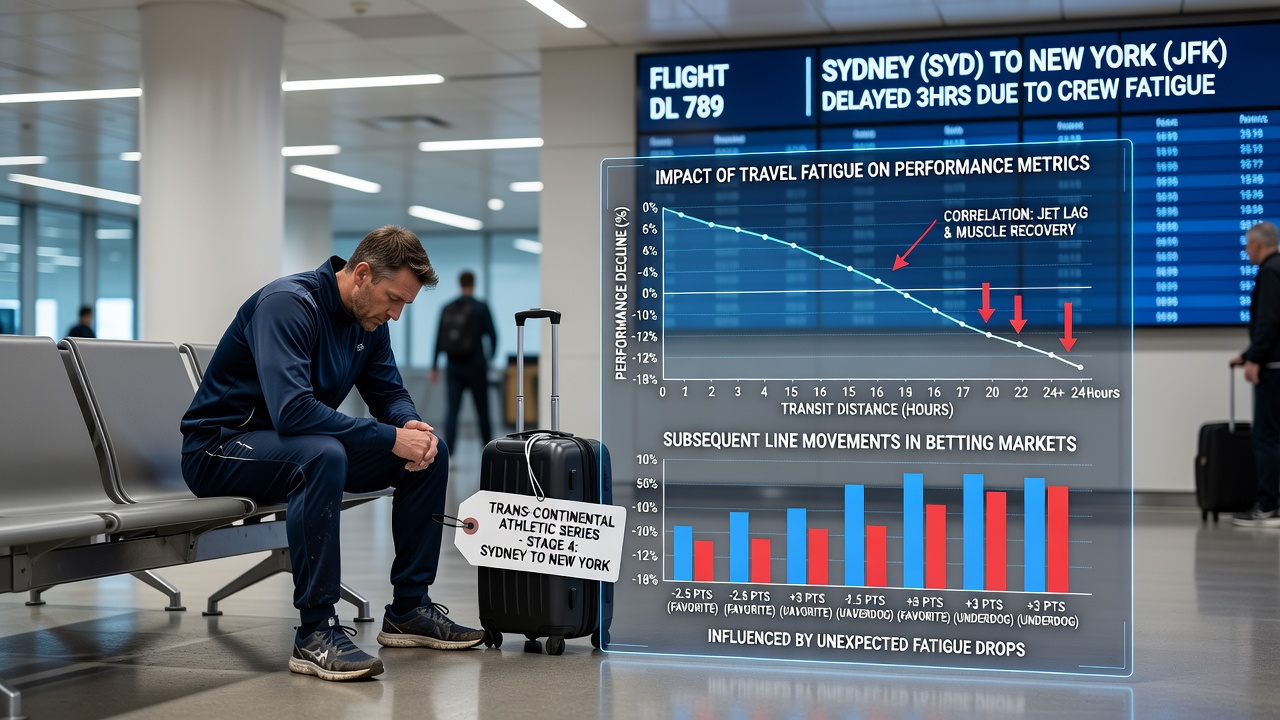
The Overlooked Impact of Travel Fatigue on Performance Metrics and Subsequent Line Movements in Transcontinental Athletic Series
Transcontinental athletic series bring together competitors from distant regions and create conditions where travel fatigue becomes a measurable factor in outcomes, with data from multiple sports showing declines in key performance indicators that directly influence betting market adjustments. Observers note that flights spanning several time zones disrupt circadian rhythms, reduce sleep quality, and alter physical readiness, particularly in events scheduled for June 2026 that include extended tours across North America, Europe, and Asia.
Studies compiled by the Australian Institute of Sport have tracked athletes in rugby and tennis who cross multiple meridians, revealing consistent drops in reaction time and endurance metrics during the first 48 to 72 hours after arrival. These shifts appear in box scores and match statistics as lower shooting percentages in basketball exhibitions, slower serve speeds in tennis openers, and reduced tackle completion rates in rugby fixtures, prompting oddsmakers to recalibrate spreads and totals based on historical patterns rather than raw talent assessments alone.
Performance Metrics Affected by Extended Travel
Researchers tracking transcontinental movements document specific changes in measurable outputs, such as decreased sprint distances covered in the opening quarters of basketball games or increased unforced errors during early sets of tennis matches played shortly after long-haul arrivals. Data from international cricket and rugby tours shows similar trends, where bowlers and forwards exhibit reduced accuracy and power output when schedules compress recovery windows between continents.
One analysis of ATP events spanning the Pacific and Atlantic highlighted how players arriving from Australia to North American hard-court stops posted first-serve percentages several points below their seasonal averages, while free-throw conversion rates in NBA preseason games held overseas dipped by comparable margins according to league tracking systems. These patterns emerge most clearly in the initial rounds of series that continue through June 2026, where cumulative fatigue from successive flights compounds the effects on precision-based skills.
Time Zone Displacement and Recovery Timelines
Displacement across five or more time zones extends the period required for full physiological adjustment, with evidence from sports science programs indicating that heart rate variability and muscle recovery markers remain altered for up to five days post-flight. In rugby tours and tennis circuits that crisscross hemispheres, this window overlaps with match schedules, producing measurable reductions in high-intensity efforts captured by GPS and optical tracking technologies.
Figures from monitoring equipment used in European basketball leagues hosting North American teams reveal slower transition speeds and fewer defensive rotations during early contests, outcomes that align with documented disruptions to melatonin cycles and core body temperature rhythms. Bookmakers incorporate these established recovery curves when setting opening lines, often shading totals lower for games involving recent arrivals compared with rested home squads.
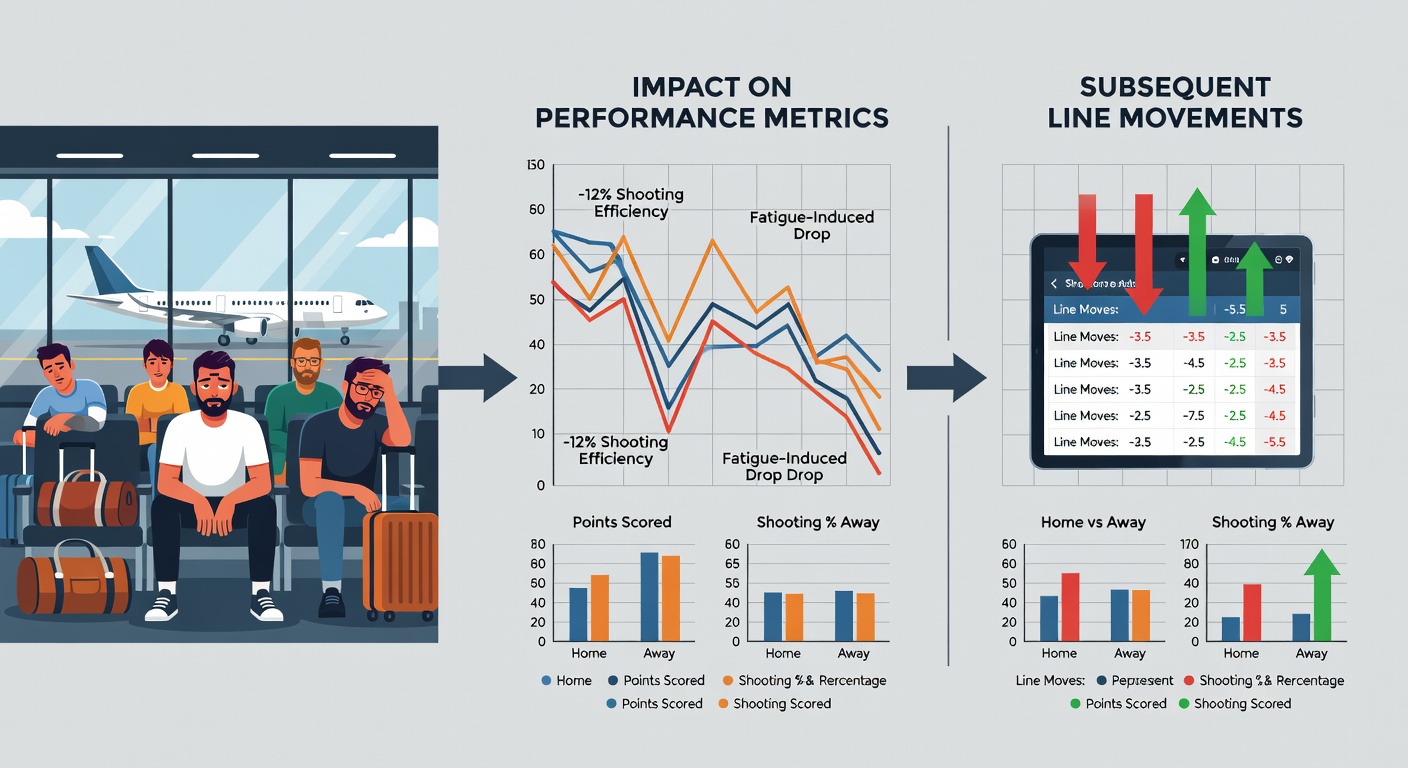
Line Movements Triggered by Fatigue Indicators
Betting markets respond to incoming performance data streams by shifting spreads and over-under totals once early matches in a transcontinental series establish fatigue-related trends. When metrics such as points per possession or break-point conversion rates fall below projected baselines, lines move to reflect the statistical reality rather than pre-series expectations, creating opportunities for bettors who monitor travel schedules alongside statistical releases.
Historical records from rugby sevens and tennis grand-slam lead-ins demonstrate that totals frequently close several points or games lower when both participants have logged substantial recent air miles, while spreads widen in favor of squads with shorter travel demands. These adjustments occur rapidly as live data feeds update, with oddsmakers drawing on aggregated information from prior tours to refine models before subsequent fixtures begin.
Examples from Recent and Upcoming Series
During the 2024-2025 basketball exhibitions staged across continents, teams arriving from the western United States posted offensive efficiency ratings several points below their domestic averages in the first two games, prompting totals to drift downward as the schedule progressed. Similar movements appeared in tennis tournaments where participants flew directly from Asian stops to European clay events, with set lengths and rally counts reflecting the documented recovery lag.
Preparations for June 2026 events, including expanded rugby tours and multi-continent tennis festivals, already incorporate these variables into preliminary line construction, drawing on datasets maintained by international federations that log flight durations alongside on-field outputs. Observers tracking these markets note that early indicators from training sessions and medical reports often precede the formal release of adjusted odds.
Conclusion
Transcontinental athletic series continue to generate performance data that highlights the role of travel fatigue in shaping results across basketball, tennis, rugby, and related disciplines. Metrics collected through standardized tracking systems feed directly into the processes that determine betting line placements and subsequent movements, with established patterns guiding adjustments well in advance of June 2026 fixtures. Those who follow both the travel logistics and the statistical outputs gain a clearer view of how these factors interact within live markets.