Venue Acoustics Reshaping Athlete Timing and Market Recalibrations Across Court, Pitch and Ring Events
Written by Tina Müller · Jun 2, 2026
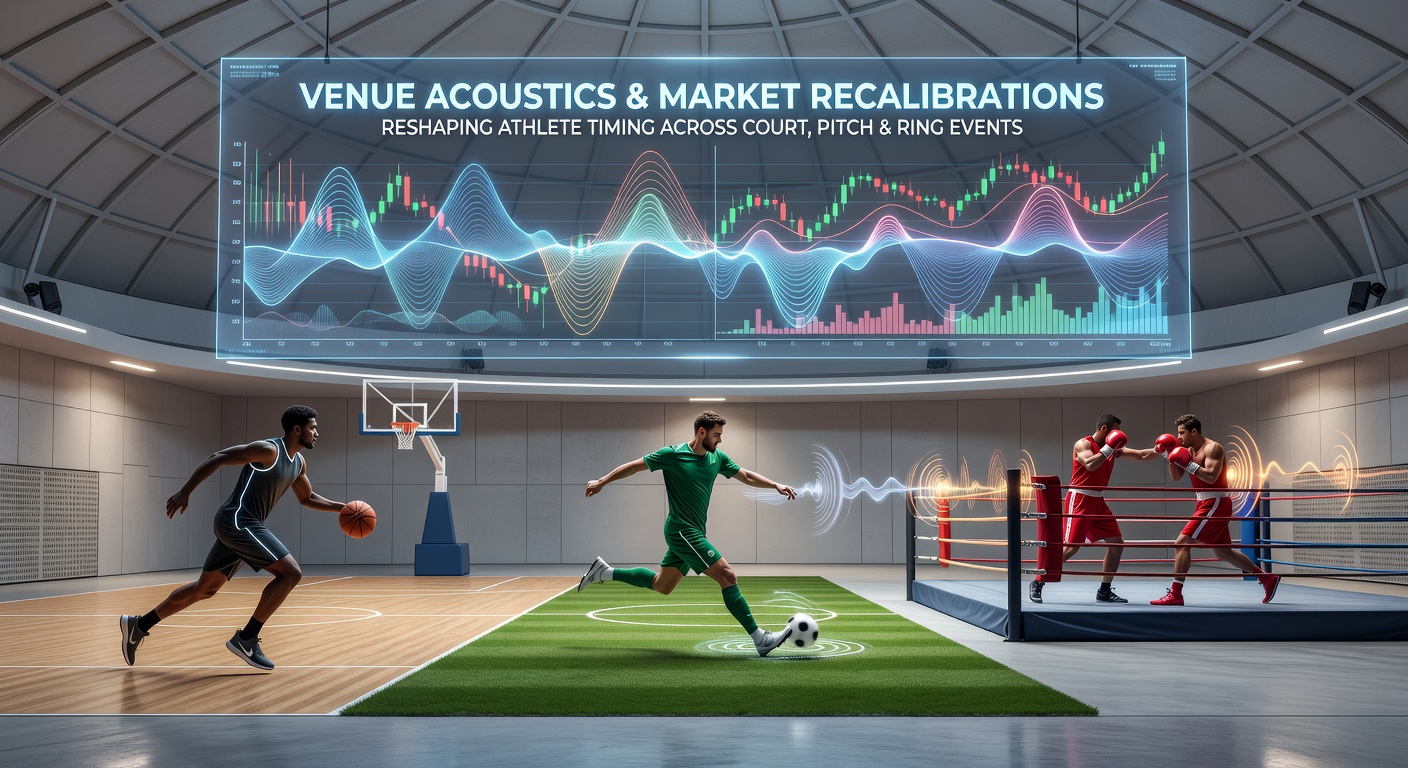
Venue Acoustics Reshaping Athlete Timing and Market Recalibrations Across Court, Pitch and Ring Events
Acoustic environments in sports venues have drawn increased attention from performance analysts and betting markets alike, particularly as sound patterns influence reaction windows for athletes across tennis courts, football pitches, rugby fields, and boxing rings. Data from venue monitoring systems indicate that reverberation times and crowd-generated frequencies can shift athlete response latencies by 50 to 120 milliseconds in enclosed or semi-enclosed spaces, prompting bookmakers to adjust pre-event and in-play lines accordingly during the 2026 summer calendar.
Court Environments and Reaction Windows
Tennis facilities equipped with modern sound-dampening materials still exhibit measurable echo effects when capacity crowds exceed 12,000 spectators, and researchers at the University of Queensland have documented how baseline rally timing changes under these conditions. Players adjust footwork cadence and return preparation because delayed auditory feedback from ball impact reaches their ears later than visual cues, creating split-second hesitations that alter point durations. Betting platforms tracking these micro-adjustments recalibrate over/under totals on rally length and service hold percentages within the first set of matches scheduled for June 2026 tournaments.
Basketball arenas present a parallel dynamic where hardwood surfaces amplify low-frequency crowd vibrations that travel through players' feet, and timing data collected during high-stakes conference finals show defensive close-out speeds slowing by an average of 80 milliseconds when arena acoustics peak during timeout periods. Market operators respond by widening spreads on fast-break scoring props and adjusting live totals when home-team possessions stretch beyond projected lengths.
Pitch and Field Sound Propagation
Football and rugby pitches introduce different acoustic variables because open-air stadiums channel sound waves along varying wind corridors, and analysts note that communication between teammates during set pieces becomes less precise when crowd density creates standing-wave interference near the penalty areas. Studies tracking player movement via GPS and audio sensors reveal that reaction times to referee whistles lengthen measurably in venues where concrete bowl designs trap mid-range frequencies, leading oddsmakers to recalibrate corner and try-scoring markets ahead of June fixtures.
Cricket grounds add another layer because boundary ropes and pavilion structures bounce ball-strike sounds back toward fielders at different intervals depending on attendance levels, and timing discrepancies in catching sequences have prompted minor shifts in spread-betting lines on run rates during day-night internationals. Observers note these recalibrations occur rapidly once real-time acoustic sensors feed data into algorithmic pricing models.
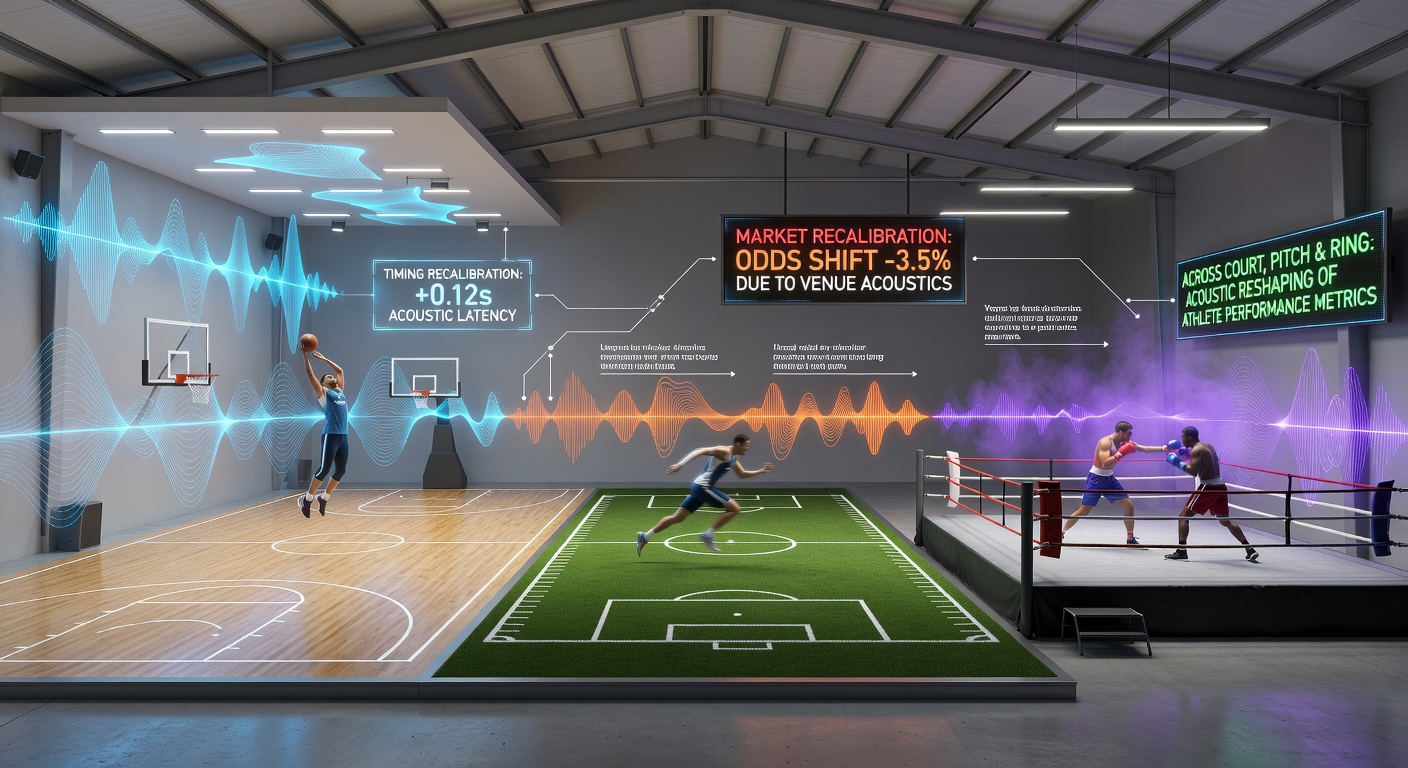
Ring Acoustics and Punch Timing
Boxing rings generate their own acoustic profile where canvas tension and rope vibrations combine with ringside audience volume to create layered sound fields, and performance logs from professional bouts show that fighters' counter-punch intervals extend when low-frequency crowd roars mask the audible cues of opponent foot shifts. Regulatory bodies such as the International Olympic Committee have referenced acoustic mapping in combat sports preparation guidelines, and these findings feed directly into pre-fight market models that adjust round-total and stoppage probabilities for June 2026 cards.
Promoters and data providers integrate venue-specific reverberation measurements into their pricing engines, which allows live odds to respond within seconds when acoustic spikes coincide with visible fatigue indicators in later rounds. The result is tighter synchronization between observed timing shifts and market movements across court, pitch, and ring disciplines.
Market Data Integration and Recalibration Patterns
Betting operators compile acoustic sensor outputs alongside biometric and video feeds to refine their models, and figures released by industry research groups indicate that timing-related adjustments account for up to 18 percent of in-play line movements during peak attendance events. These recalibrations appear most pronounced in venues hosting multiple sessions per day, where cumulative crowd noise builds across afternoon and evening programs.
Analysts compare historical datasets from similar stadium configurations to forecast when acoustic factors will dominate other variables such as weather or player form, and the resulting probabilities flow into customer-facing markets within minutes. June 2026 schedules feature several high-profile multi-venue events where these layered data streams are expected to drive frequent but incremental odds updates rather than dramatic swings.
Conclusion
Venue acoustics continue to register as a measurable input in athlete timing profiles and corresponding betting market adjustments across tennis courts, football and rugby pitches, basketball arenas, and boxing rings. As sensor technology and data integration advance, operators and performance teams alike treat sound environment metrics as standard variables in their analytical frameworks, producing more granular recalibrations that reflect real-time conditions rather than static venue assumptions.